Reprioritize water for ʻāina and local communities — not private interest
Partners: Lāhainā Strong
The problem:
For far too long, Maui’s water policies have unsustainably, unfairly, and illegally favored commercial interests — not the environment or public interest, as required by Hawaiʻi law.

West Maui is facing saltier aquifers, dryer streams, and lower rainfall than ever. Water and land use policies pushed by private interests to fuel the plantation era — which are now fueling over-tourism and over-militarization in Hawaiʻi — are substantially to blame, our experts said.
People largely agreed on who has consistently used more than their fair share of West Maui’s water:
Large landowners
Maui Land and Pineapple and West Maui Land Co. have diverted, hoarded, and wasted stream water for decades, causing extensive environmental and economic harm.
Resorts and golf courses
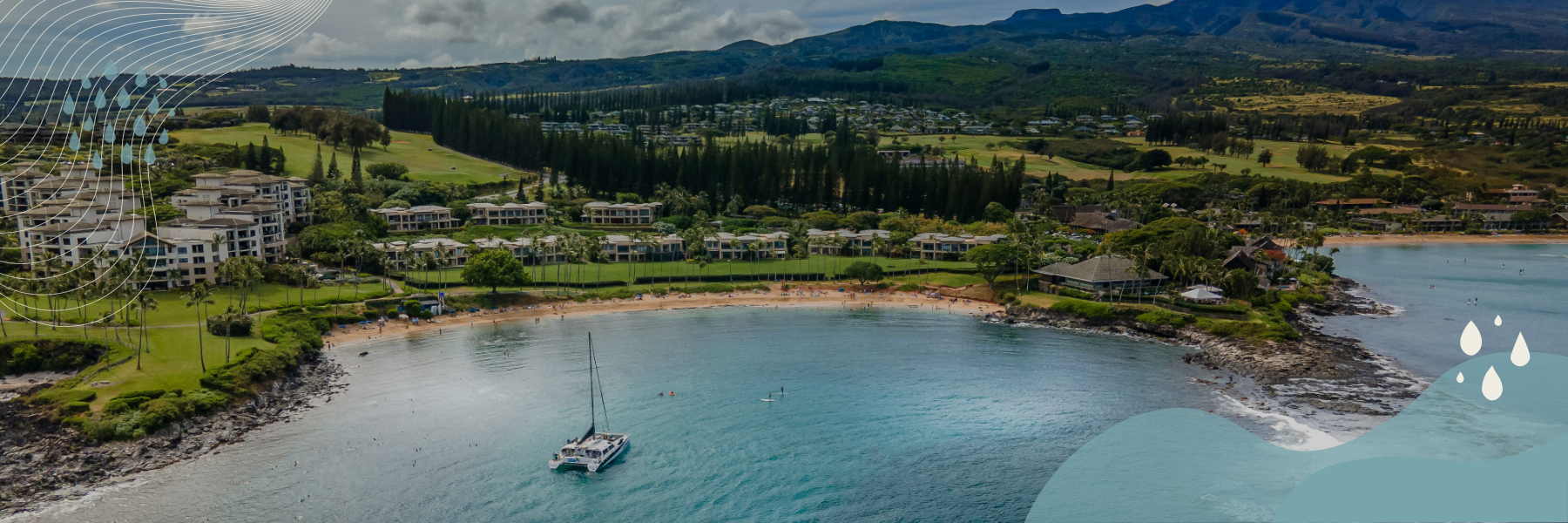
Resort units use 7.5x as much water as owner-occupied homes. Kapalua’s two golf courses use up to 1.5 million gallons per day (the equivalent of 2,500 single family homes).
Vacation homes and short-term rentals
Non-owner occupied (i.e. investment) homes use twice as much water per household as “owner-occupied” (i.e. local) homes.
Some government entities
Since the overthrow, Hawaiʻi government has largely been led and influenced by pro-corporate interests — though our experts felt that this trend has slowly been shifting in recent years.
Many experts expressed frustration that so many elected officials have refused to even admit there’s a problem, or haven’t wanted to (or been able to) create policies that are strong enough to actually make the largest water abusers change course.
However, overall, the people we spoke with felt that the Bissen administration has made positive and significant steps toward reclaiming water for public benefit, and were more concerned about how Maui County Council Vice-Chair Yuki Lei Sugimura, who is running against Bissen, would approach water use policies.
Nearly all pointed to the state water commission (CWRM) as a key factor in why water allocations still aren’t prioritizing the legally required uses. Others added that Maui County Council, Maui Planning Commission, and the state Land Use Commission have also played key roles in creating water, land use, and fiscal policies that favor commercial interests in front of public interests.
The solution:
Maui MUST shift its policies to prioritize public trust, sustainable, and equitable uses before extractive uses like luxury homes, resorts, and golf courses.
Regardless of who controls the water systems, our experts wanted both the county and state governments to create more explicit water use policies, decision-making processes, and enforcement mechanisms that prioritize the environment, cultural and subsistence uses, local residents, and future generations — and end the fast-tracks and loopholes that wealthy and politically connected private interests have enjoyed.
This isn’t just what people want, Hawaiʻi law requires it. Legally, both government and private water purveyors must prioritize the following uses:
Keeping water in its “natural state”
Think: mauka to makai flow BEFORE stream diversions
Domestic uses
Think: drinking water for local families BEFORE drinking water for hotel guests
Hawaiian “traditional and customary” practices
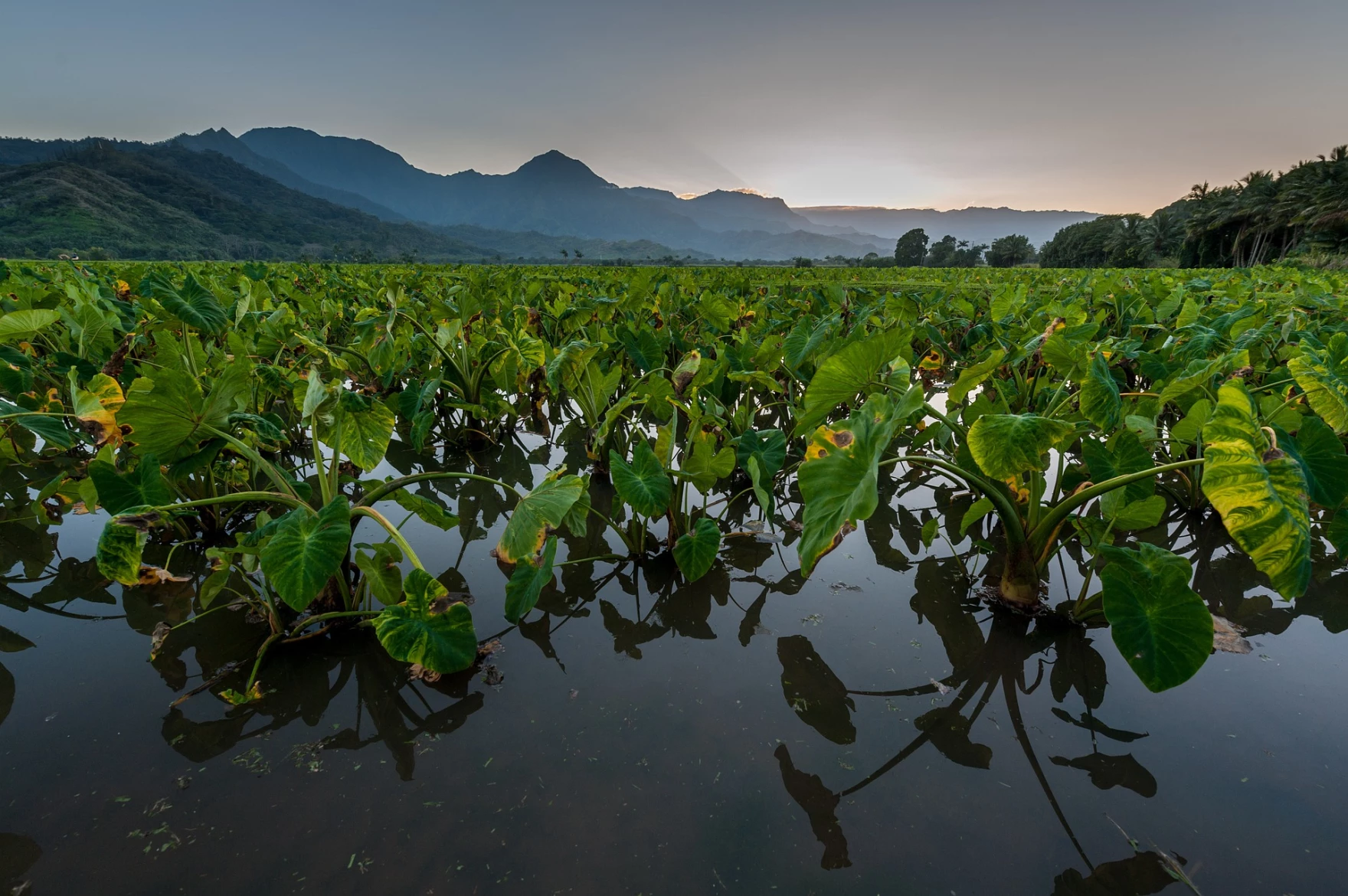
Think: kalo farming BEFORE corporate agriculture
Department of Hawaiian Home Lands allocations
Think: Hawaiian homesteads BEFORE luxury homes
Our experts said Maui needs to prioritize affordable housing — not just “more housing.”
Our experts said large landowners, real estate developers, and their political allies exploit the affordable housing crisis as a way to push for more luxury, market-rate, and commercial development.
Often, that looks like pushing for “more housing” without requiring it to be affordable, using a definition of affordable that isn’t actually affordable for most local families, only making a portion of the housing affordable — and, minimizing or ignoring the hidden costs of new housing, which are typically passed on to local families and people who are already housing insecure.
In its proposal, MLP is making no promises to build affordable housing, while asking for more guaranteed water that could be used for future developments.
Our experts are concerned that the current proposal could give MLP a fast-lane to build luxury housing, and urged Maui County to take more explicit action (in the MOU and through other policymaking) to actually incentivize affordable housing and discourage more luxury homes.
The stakes:
Maui’s water use policies have already been causing harm for generations. Every moment the county delays changing how it stewards water, it jeopardizes water availability for current and future generations.
Many water experts have raised concerns that Maui has overestimated its sustainable yield — effectively the island’s groundwater “budget” — and consuming water too quickly based on based on unreliable and outdated data, with climate change only exacerbating the problem. In East Maui, a court just used similar logic to invalidate water diversions granted to Mahi Pono, a developer owned by controversial Canadian pension fund PSP Investments.
When water is extracted from an aquifer, It takes up to 60 years to recharge, according to Lāhainā native and water expert Kekai Keahi. Since Maui can’t just create new water sources overnight, many experts are deeply concerned that Maui isn’t moving quickly or directly enough to address the underlying issues before it causes irreparable harm to both current and future generations.
The community voices:
“Ola i ka wai! Water is life!”
~ Nā Mamo Aloha ʻĀina o Honokōhau

“Our position remains that water should flow mauka to makai and the needs of public trust uses such as kalo farming in Honokōhau Valley must be met before any water is diverted out of the watershed for luxury housing, resorts, and recreational golf courses. The new climate reality requires our entire Maui community to be prudent with our precious water resources and protect them for future generations. Ola i ka wai! Water is life!”

“The priority before was with kuleana users and taro farmers. Resorts and hotels were last. But it’s flipped [now]. They get the water first. They get 77% of our water resource and they use ‘em until the thing turn salty. So their management of this source is no good.”

“[Companies like MLP and Hawaiʻi Water Service] are still using a significant amount of water for extractive purposes that don’t help to generate food sovereignty and subsistence for the community and are still extracting resources for the benefit of shareholders and not actually for the people of Hawaiʻi.”
“I would like to see a significant reduction in the amount of water that’s diverted out of this watershed. Loʻi kalo only borrow the water from the stream… that’s how the traditional irrigation system works. But when you’re servicing resorts and luxury housing, all of this water is diverted out of the watershed and off-stream and never returns to the stream to flow mauka to makai or to recharge our aquifers.”

“Regardless of who the owner is, there’s a public trust obligation under the constitution to manage these resources… We have our public trust and traditional and customary users, our true domestic users, folks that have priority under the constitution and under the water code. If they’re still not getting their water, then the person that’s withholding it or violating [the law], it doesn’t really matter who that party is from a legal perspective,” Hara said, meaning both Maui County and private purveyors have a legal obligation to prioritize public trust uses over private interests.
“When you talk about the public trust, it’s not just for current residents, it’s for present and future generations… in Hawaiian culture you’re thinking about hundreds of generations ahead, you’re not just thinking about today.”
The Bissen administration:
“We’re not acquiring this water system just to take the place of someone else and do what’s been happening.”
~ Mayor Bissen

Richard Bissen, Mayor:
“Anything we do has always been focused on the benefit of our people… we’re not acquiring this water system just to take the place of someone else and do what’s been happening. We’re taking over the system because we think in the long run it will benefit our entire community.”
We all know we gotta go to CWRM [to reallocate where water goes]…I can’t dictate every gallon of water without getting some approval, but of course the community is informing us whether this is for building homes, whether this is for agriculture, whether this is for cultural revitalization, if there are economic reasons for us to to do certain things. There’s so many areas that water affects and water is the most important thing in many of these discussions. We’re well aware of that.”
Kimo Landgraf, Deputy Director, Board of Water Supply:
“We’re always gonna look at the traditional and customary stuff first, just like how it is in the [state water code]. So basically we’re gonna pretty much follow what the code says and try to make it as balanced as possible.”
Check back tomorrow for the next story in this series, where our experts will talk about the track record of companies like MLP when it comes to managing water in West Maui.

Take action!
Testify online:
Watch online:
Attend in person:
Kalana O Maui Building, 8th Floor
200 South High St., Wailuku, HI