Seven key takeaways from CWRM’s February meeting via community voices
On Tuesday, February 24, on Oʻahu, the Commission on Water Resource Management (CWRM) held their monthly public meeting, discussing extremely vital issues to Maui Komohana (West Maui) ʻāina and communities.
Kaheāwai Media typically doesn’t do breaking news, because rushing to write a story on a complex topic in just a few hours often leads to inaccuracies.
But after seeing the resulting local media coverage, we decided to publish our own story in an effort to address several inaccuracies and misleading narratives we saw mainstream outlets give voice to.
Still wondering if this story is worth your attention?
Why trust us?
We take our time to ensure more accuracy
We watched CWRM’s meeting in person for the entire first half of the day, and then watched the remainder of the Maui Komohana related agenda items virtually.
We’ve also been doing research on these issues for months, and have spoken in-depth with more than 50 water experts, including Maui Komohana lineal descendants, cultural practitioners, kiaʻi wai, attorneys, historians, scientists, community organizers, current and former government officials, and others with lived experience and learned expertise.
By contrast, we watched other media outlets arrive late, leave the meeting early, speak with community testifiers for barely a few minutes, and publish stories mere hours after the meeting ended, leaving little time to reflect on, process, or fact-check what they had observed.
We understand that news needs to be quick enough to still be relevant, but not at the cost of misleading audiences.
And, we acknowledge that our own reporting will inevitably have blind spots too — and we welcome more community manaʻo to help us fill in the picture.
Why should I read this story?
CWRM’s decisions will shape the future of Maui Komohana
Hawaiʻi has some of the strongest water laws on paper, yet in practice, it has consistently failed to enforce those laws, favoring private and commercial users despite the law requiring it to prioritize public, environmental, and cultural users.
CWRM has been at the epicenter of many of those regulatory failures, and how CWRM acts in the coming months will play a key role in shaping the future of Maui Komohana for generations.
Currently, two massive corporations are battling over control of water resources and infrastructure in West Maui as communities fight to protect their own water rights, and CWRM will be a major factor in whether and how those rights are upheld.
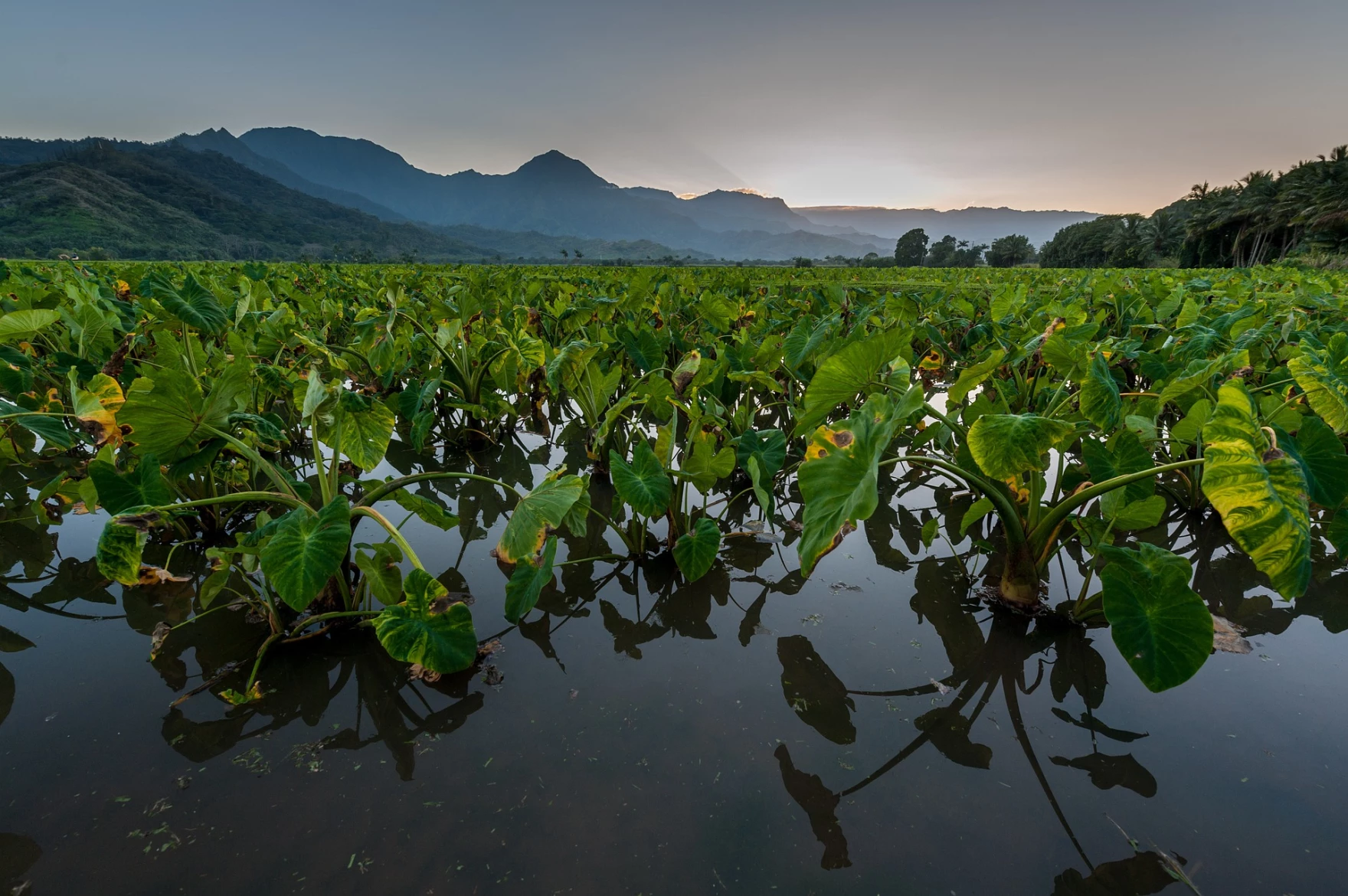
The future of Lāhainā’s ability to rebuild, of Honokōhau farmers’ ability to grow kalo, of affordable housing projects’ ability to access water, and so much more hinge substantially on how CWRM proceeds from here.
With stakes this high, it is absolutely essential for the public to learn more about CWRM, how it’s supposed to make decisions, how it actually does, and how people can hold them accountable for responsibly stewarding our wai.
How will this story help me do something about this issue?
We equip our audiences to take action
We know how depressing and paralyzing it can feel to read the news. This story may feel frustrating to read at first, but we promise there are uplifting pieces too.
And most importantly, there are real ways community members can make their voices heard and hold CWRM accountable.
If at any point while reading this story, you feel motivated to turn that into action, check out the green “Take Action!” section of this page (on the right for those on computers, and at the end of the page for anyone on smaller devices).
The backdrop:
Hawaiʻi has strong water laws. CWRM is just bad at enforcing them, often favoring private interests. BUT, community demands and new commissioners could change its course.
Testifier: Dru Hara, Earthjustice attorney
CWRM decisions have been rejected 80% of the time when appealed to the Supreme Court.
~ Source: Water and Power in West Maui & Jonathan Likeke Scheuer
1 out of 3 commissioners have been employees of large landowners, ranchers, or plantation employees. CWRM went decades without a single kalo farmer, but has always had at least one commissioner representing these private interests
~ Source: analysis by Jonathan Likeke Scheuer, shared with Kaheāwai Media via email
Staff have frequently faced retaliation when they try to protect public, environmental, and cultural uses. Multiple water law experts cited Deputy Director Kaleo Manuel’s exit from CWRM after the Lāhainā fires, despite CWRM Chair Dawn Chang’s acknowledging he had “overwhelming support” from the Lāhainā community, as one recent example.
CWRM lacks the independence from political influence needed to effectively uphold water rights, between strategic under-funding by the legislature, slow and politicized government hiring processes, and the Governor and legislature having control over the appointment of commissioners.
New commissioners appointed to CWRM in recent years have more background in water protection and cultural knowledge. But even those changes faced resistance, such as the appointment of well-respected kiaʻi wai, Hannah Springer — which only came after Gov. Josh Green’s controversial and ultimately failed attempt to bypass the legal appointment process.
Senate Bills 2002 & 2022 could help give CWRM more independence and enforcement tools. However, experts told us many changes are needed to improve CWRM’s ability to protect water rights. Both bills passed “second reading” in the Senate today (March 4), and now must pass a final “third reading” — a crucial step where most discussion on the bill happens.
~ Source: Senate Ways and Means (WAM) committee
Community members are paying more attention. Tuesday’s meeting galvanized communities that have been dealing for decades with illicit actions by Maui Land and Pineapple and other large landowners. Dozens of testifiers, from kūpuna to keiki, showed up to hold CWRM accountable.
The setting:
CWRM may have broken the law by meeting on Oʻahu instead of Maui — excluding key community voices
Testifier: Karyn Kanekoa, Honokōhau farmer
“Hearings regarding particular water resources shall be conducted on the island where those water resources are located.”
~ Source: HAR §13-167-22
Multiple Honokōhau residents got up at 3am to fly out over to Oʻahu to attend, but dozens couldn’t make it or had to testify virtually.
This matters because it prevented many community voices from being heard AND skewed who was in the crowd packed into the extremely small DLNR conference room — all factors that can subtly influence CWRM’s perception of how the public feels about an issue.
To be clear, community attendees still outnumbered people from Maui Land & Pineapple and TY Management (the two main corporations involved). However, CWRM’s decision to hold the meeting on Oʻahu made it appear as if MLP and TY representatives made up a higher portion of the public than they did in reality.
The biggest story:
CWRM’s failure to process a single water permit 2.5 years after the fires appears political
Testifier: Wili Wood, Honokōhau farmer
Before the 2023 fires, CWRM moved to designate Lāhainā a “water management area”
All existing users had to file Water Use Permit Applications (WUPAs) by Aug. 7, 2023, if they wanted to keep using water in those ways
Since the fires, CWRM has not approved a SINGLE permit — invoking frustration from nearly every testifier on Tuesday.
Hawaiʻi law is extremely clear that CWRM must prioritize “public trust” uses — NOT private users.
Public trust uses include: keeping water in its “natural state” (e.g. mauka-makai flow), domestic use (e.g. drinking water), Hawaiian “traditional and customary” practices (e.g. kalo farming), and allocations for the Department of Hawaiian Home Lands.
CWRM’s failure to even approve any public trust use permits has created a perception among community that political interference is at play.
Community members repeatedly demanded that CWRM do its job and start processing permits.
The overlooked nuance:
CWRM chair Dawn Chang “unilaterally and unlawfully” told TY Management it could water Kapalua golf course with drinking water during a drought
Testifier: Devin Haia, Native Hawaiian Legal Corporation legal fellow
Chang sparked controversy last August by telling Maui Land & Pineapple, Hawaiʻi Water Service, and TY that they had permission to use potable groundwater to water Kapalua’s golf courses — during a historic drought where community was told to conserve water.
~ Source: Maui Now
Earthjustice’s complaint said Chang’s “unilateral action to afford special treatment to a single private commercial user for lesser-priority golf course uses, while everyone else’s WUPAs remain in limbo for years, violates the law and disserves the Maui Komohana community.”
~ Source: CWRM agenda exhibits – page 241
Chang also directly contradicted her own Deputy Director, Ciara Kahahane who, just a week earlier, told the Governor’s office that “MLP’s wells were not being used to irrigate golf courses in Aug[ust] 2022; therefore, they cannot be used for this purpose now.”
~ Source: CWRM agenda exhibits – page 240
Yet, for four months, MLP and HWS allegedly kept illegally supplying millions of gallons of drinking water to help TY irrigate the golf course.
Kahahane explicitly told the commission that the controversy is why she put the dispute on the agenda — which many community members argued was a waste of time and a distraction from the real issues.
Community members were overwhelmingly in support of CWRM rescinding Dawn Chang’s controversial letter and correcting the record.
However, people left frustrated when the commission, after seeking advice from legal counsel, decided they couldn’t do that Tuesday because they had failed to include it properly on the agenda.
UPDATE: on March 2, CWRM Acting Chair Ryan Kanakaʻole issued a letter reversing Chang’s actions, confirming TY is not authorized to use groundwater to irrigate their golf courses and hadn’t met the burden of proof to get approval for that use.
~ Source: Earthjustice
The double standard, part 1:
How did TY Management skip to the front of the line?
Testifier: Isaac Moriwake, Earthjustice attorney
A few days before CWRM’s meeting, Maui County Council member (and mayoral candidate) Yuki Lei Sugimura tried unsuccessfully to delay the county from allocating $10M to the Department of Water Supply to help it buy back private water infrastructure. ~ Source: Maui County Council meeting, 2/18/26
Sugimura cited a private meeting with TY as the reason the funding should be delayed, but wouldn’t say publicly what they had told her, raising the question of what information she had received.
Sugimura’s move came as the Maui County Board of Water Supply is in active talks with Maui Land & Pineapple about purchasing its water infrastructure.
~ Source: Hawaii News Now
On Tuesday, for unknown reasons, CWRM voluntarily gave TY roughly 45 minutes to present what many testifiers felt amounted to a free sales pitch for TY to redesign West Maui water infrastructure to suit its own needs. TY’s pitch involved guaranteed groundwater sources for its golf courses and luxury homes — a plan that seemed directly at odds with existing county plans and environmental realities.
~ Source: CWRM, Briefing C2
As of the day of the meeting, while every other CWRM agenda item had links to relevant documents, TY’s presentation was conspicuously missing — meaning community didn’t get a chance to review it before.
While kalo farmers have often had to wage costly legal battles lasting decades just to force CWRM to listen to them and uphold their constitutionally guaranteed rights, private interests have long leveraged unique access to government officials (like TY’s private meeting with Sugimura) and the promise of “investment” to manipulate agencies into prioritizing their private interests.
“Just for transparency purposes, how did this get on this meeting agenda, just for Sunshine Law purposes? And this, I think, is an issue because, as you may recall, Kekai [Keahi] did ask for, ‘hey next time, let’s have the community have some kind of platform.’ And yet, these big entities keep on having their big presentations.”
~ Source: Isaac Moriwake
The double standard, part 2:
Free advertising for TY Management’s flawed plan for a water grab
Testifier: Al Medeiros, kiaʻi ʻāina
TY’s plan included glaring holes in its operational details, relied on potentially illegal or unfeasible water uses, and suggested drastic changes to water use priorities in Lāhainā.
TY sought to give itself priority access to highly desired R1 (recycled) water, despite existing proposals for that water to service Lāhainā.
~ Source: Maui Nui Strong
“Could they get R1 to Kapalua in two years, or is maybe this just sort of an attempt to offer to throw money at anything out there just in order to get permission to keep using groundwater to water their golf courses in the meantime?”
~ Source: Mahesh Cleveland, Earthjustice attorney
TY proposed drilling two new wells and letting Maui county use one while it waited for a new R1 system to be built and connected to its golf courses — an idea that alarmed water experts amid a growing consensus that Lāhainā’s aquifers are already maxed out.
“There may be not sufficient water in Honokōhau Stream for the county, DHHL, and in-stream uses in Honokōhau… even if you just said, okay, the [constitutionally protected] public trust uses… there might not be enough for those, much less additional uses of water.”
~ Source: Jonathan Likeke Scheuer
Additionally, CWRM’s guesses of how much water Maui can sustainably pull from the water system are based on notoriously flawed methods — they rely on old data that fail to account for recent climate changes and drought conditions, and use an outdated statistical model, even as water authorities elsewhere have switched to more accurate models.
~ Source: Jonathan Likeke Scheuer, Hawai‘i WRRC Seminar Series
Private interests have systemically controlled and exploited Hawaiʻi’s water for over a century, causing extensive and well-documented economic, environmental, cultural, and social harms.
Globally, in places as diverse as Brazil, Bolivia, London, Paris, South Africa, Morocco, Jakarta, Colorado, and Los Angeles, water privatization and “financialization” have had consistently negative impacts, especially for lower-income communities — and 59% higher rates for private water customers on average (Food & Water Watch).
“Major global investors and billionaires are turning water, an essential public good, into a new asset class to squeeze out more wealth and further exacerbate unsustainable levels of inequality. The commodification of water, whether for agriculture or as a utility, has been a disaster for people and planet everywhere it has occurred.”
~ Source: Jason Ward, Centre for Corporate Tax Accountability and Research, shared with Kaheāwai Media via email
However, many communities are reclaiming control over water through re-municipalization, community water authorities — like the new East Maui Water Authority — and even legal personhood for water, as Aotearoa (New Zealand) did with the Whanganui River.
The double standard, part 3:
Feckless fines for Maui Land & Pineapple
Testifier: Sesame Shim, kumu, King Kekaulike High
Maui Komohana farmers pleaded with CWRM again Tuesday, as they have for decades, to protect their water rights — yet things went vastly different for MLP.
In December, CWRM fined MLP, a $332 million company, a mere $140,000 for illegally diverting water from Honokōhau Stream on 28 separate days last year.
This lax response to water law violations by private entities has been common throughout CWRM’s history, and even in Maui Komohana specifically.
“The precedent of allowing a corporate diverter who has violated the IIFS [Instream Interim Flow Standards] to put fine monies back into their own systems that they should already be maintaining was set by another one of Peter Martin’s subsidiaries, Olowalu Water Company, after they violated their IIFS for 548 days or so. And to this day, we don’t even know if all or any of the improvements they were ordered to do have been completed.”
~ Source: Lauren Palakiko
Yet, rather than make MLP pay even this small fine, CWRM allowed them to add three new water gauges and cameras to the stream, give CWRM and the public access to the data, and maintain the gauges for 1.5 years — a project they claimed would cost the equivalent of the $140,000 fine.
While many kiaʻi wai supported the increased transparency the gauges would bring, most people felt that those improvements should have happened years ago, and shouldn’t allow MLP to bypass the fine.
“It is like getting fined for a speeding ticket yet asking if I could use that money to fix my brakes instead.”
~ Source: Sesame Shim
US corporate law is notoriously bad at preventing corporate wrongdoing, as fines are often too small to deter future violations, and prosecutors rarely can or do hold individuals accountable.
~ Source: Elizabeth Pollman, Stanford University
By contrast, many other countries rely on larger fines, stronger systemic regulations and labor protections, and even criminal prosecutions of individual executives.
Community testimonies were resoundingly clear, they’re fed up with private interests exploiting Hawaiʻi’s resources.
“It’s always a new face, a new suit, and sometimes even a new corporate name, but what is and will always be consistent is Hawaiʻi.”
~ Sesame Shim

take action!
Attend CWRM’s next meeting