Kaheāwai Media: from seed to sprout
By Tyler Sonnemaker, co-founder & mea haʻi moʻolelo (storyteller)
Anyone who has participated in a community work day knows there’s something intangible about the effect ʻāina has on you.
As one kiaʻi who leads a nonprofit in Waimānalo told me:
“if my grant application could just be inviting you to a work day, you would get way more out of that experience versus me trying to write it down on paper. It’s not always captured in words.”
Even as the current system seeks to divide us along every possible line, I’ve witnessed ʻāina bring entire communities together to connect, learn, heal, feed and care for each other. Many of my closest relationships are with the places I mālama and people I work alongside in those places.
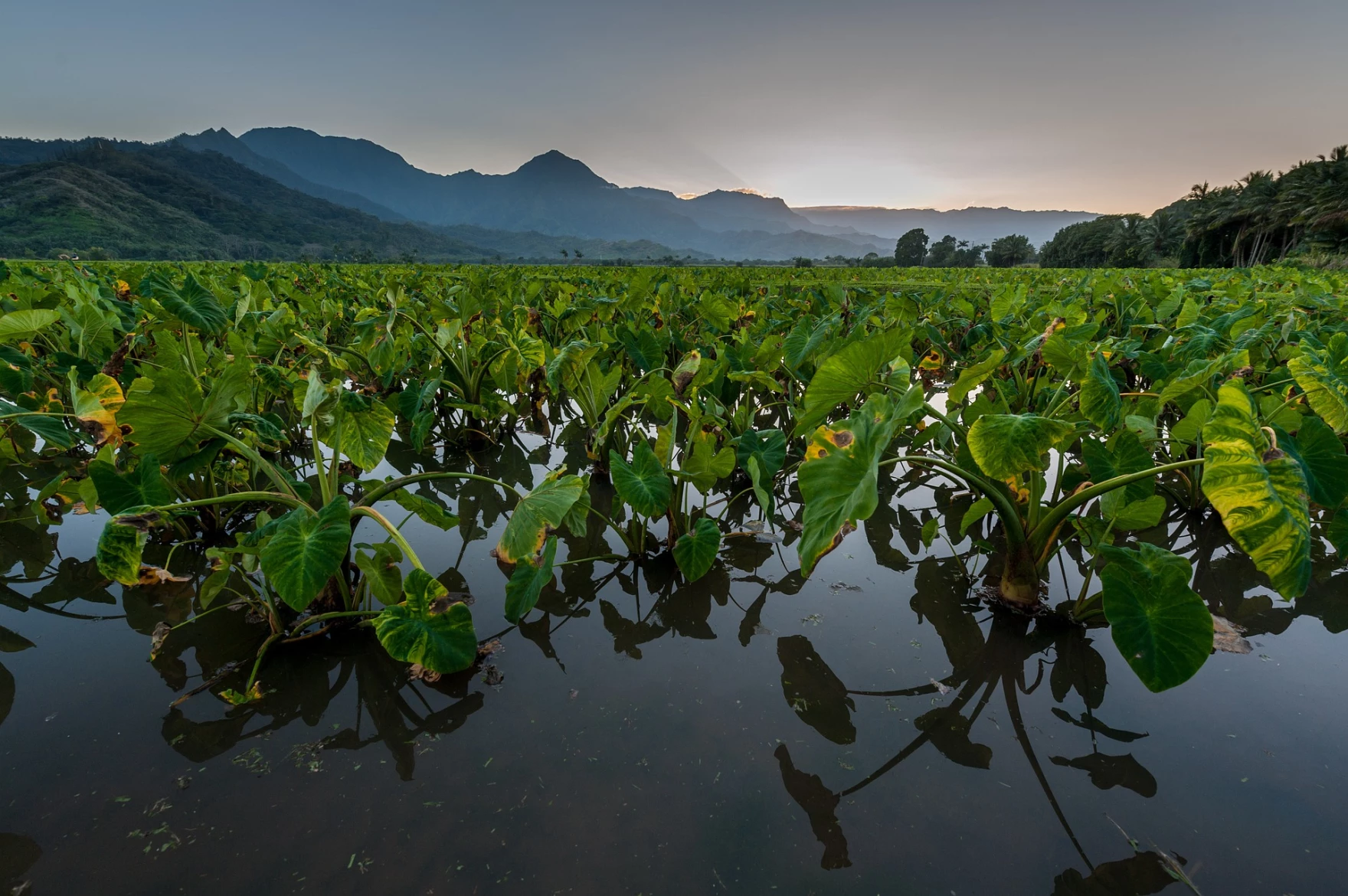
Those relationships led to a meeting in early 2023, at Waiwai Collective in Nuʻuanu, where we planted the seeds that became Kaheāwai Media. And for the past two years, our co-founders’ collective care for ʻāina and communities across Hawaiʻi has nurtured these seeds into the sprouts now emerging from the lepo.
I was raised on Kalapuya land (near Portland, Oregon) an ocean away from both Hawaiʻi and my ancestors’ lands (near the Cocker River in England). While I had a deep connection with the rivers, wetlands, and forests of Oregon that nourished me during my childhood, I had never set foot on ʻāina with the intention to care for it.
In 2021, I attended my first mālama ʻāina workday at Huilua fishpond in Kahana, led by Kimeona Kane, a kumu of uhau humu pōhaku.
I was hooked.
Something about Huilua kept calling me back. And, something about Kimeona and the space he created for community to build pilina with Huilua, cultural practice, and each other. He clearly had deep wisdom about cultivating places, practices, people and ecosystems.
At the time, as a reporter for Business Insider, I was working on a story about one Kauaʻi ʻohana’s battle to protect their ancestral land as Mark Zuckerberg continued the long history of foreigners displacing Hawaiians from Hawaiʻi.
But as I spent more time in places like Huilua, the more misaligned my work felt.
On one hand were people like Kimeona and Randy (from the Kauaʻi ʻohana), generously offering their time, energy, and expertise in service of ʻāina and community. Randy even invited me to visit his ʻiwi kupuna (ancestral burial site), located within Zuckerberg’s property.
By contrast, Business Insider’s business model was based on extracting everything possible from “sources” like Randy to produce stories that maximized advertising dollars. I started each day looking at dashboards showing how many clicks my stories generated, stressing about how I’d hit my monthly quota of 7 million total clicks.
This system favored writing a clickbait story about a tech CEO’s provocative tweet — easy to write and likely to generate 100,000+ views, but with virtually no substance — over spending the time to write a more thoughtful, nuanced, authentic, and accurate story.
During what should have been a simple editing call to finalize the Kauaʻi story, two senior editors pressured me to “cut the historical stuff” and downplay the facts around the American-led insurrection against the Hawaiian Kingdom in 1893. They wanted a sensational tabloid-style story with flashy drone footage and a “safe” villain (Zuckerberg) — not a factual story that might risk reader discomfort or losing clicks.
Fortunately, another editor and I stood our ground. With immense help from Pualiʻi Rossi-Fukino, our cultural consultant (and eventual Kaheāwai co-founder), we published a story each of us was proud of.
The following week, I quit.
Days later, Randy told me Zuckerberg’s security had imposed new restrictions on visiting his ʻiwi kupuna (ancestral burial site/remains), a right legally guaranteed by the state. Randy had given so much to this story, Business Insider had gotten so much, and yet he alone faced the backlash.
After quitting, I joined Hawaiʻi People’s Fund’s Giving Project, where I witnessed grassroots community organizing in action as Executive Director Micky Huihui gave every ounce of her waiwai in service of HPF’s community partners.
By this point, I knew that I wanted to realign my own practice as a journalist and storyteller to be, like these kiaʻi, in service of ʻāina, community, and collective liberation.
So, in early 2023, I asked several kiaʻi I knew if they wanted to work together to co-create a new media hui. Since then, dozens have contributed invaluable manaʻo to water our initial seeds. As of Kaheāwai Media’s March 2025 public launch, we are collectively stewarded by more than 20 community council members and storytelling partners.
We recognize Hawaiʻi’s long tradition of ʻāina-based storytellers, from early ʻŌlelo Hawaiʻi newspapers to media makers like Nā Maka o Ka ʻĀina, Kanaeokana and Manaiakalani Media. Beyond Hawaiʻi, we are inspired by the growing universe of community-based media movements.
Our hope is to complement — not compete with — these storytellers, collaborating to better serve our communities however we’re each asked to.
While we don’t know for sure what Kaheāwai Media’s growth will look like moving forward, we mahalo anyone in our community willing to help us steward it.
Hoʻokahi ka ʻilau like ʻana.
Wield the paddles together.
~ ʻŌlelo Noʻeau #1068, Mary Kawena Pukui