Learnings from the Kalāwahine, Kewalo & Papakōlea Firewise walkthrough
Partners: Nā Leo o Papakōlea
Hoʻolauna
Aloha mai kākou, ʻo Tyler Sonnemaker koʻu inoa. No Oregon mai au, noho au i ka ʻili o Keahupuaʻanui, ma ka ahupuaʻa o Kailua. He mea haʻi moʻolelo au a he haumana o ʻuhau humu pōhaku au. Ua kono mai koʻu mau hoa, ʻo Noel Shaw lāua oʻ Anuheaokalani Kanealiʻi, iaʻu i hele wāwae i ko ʻoukou kaiāulu a me Nā Leo o Papakōlea a Hawaiʻi Wildfire Management Organization i mamua kēia mahina.
Aloha everyone, my name is Tyler Sonnemaker, I was raised in Oregon, and now live in Kailua on the ʻili of Keahupuaʻanui. I’m a storyteller and journalist, student of uhau humu pōhaku (Hawaiian rock weaving), and friend of Noel Shaw and Anu Kaneali’i.
Earlier this month, they invited me to join their hui, Nā Leo o Papakōlea, other homestead residents, and a local nonprofit called Hawaiʻi Wildfire Management Organization (HWMO) on a walkthrough of Papakōlea, Kewalo & Kalāwahine homesteads as they completed a “community wildfire risk assessment,” one step in their joint effort to get these communities “Firewise USA” certified.
Noel and Anu asked me to write about the experience from my perspective, including who all was involved, why they did this walkthrough, what they did and learned, what next steps are planned, and how to engage with this hana, if you can/want to.
My intentions in sharing this report are to:
- kākoʻo your community’s efforts to keep each other safe in the face of increasing fire risks
- bring transparency to Nā Leo o Papakōlea’s work & process
- share information and resources that build your community’s capacity to create the changes you want to see — and hold those in power within and outside of your community accountable for fulfilling their kuleana to you
If you have any questions about this community effort, please visit Nā Leo o Papakōlea’s website, email them at naleoopapakoleafirewise@gmail.com, and also attend their event:
Nā Leo o Papakōlea Firewise: Fire Safety Day for a Fire Free New Years and 2025 Saturday December 21, 9am-12pm Lincoln Elementary
RSVP HERE:
If you have any questions for me about this report, please feel free to reach out by email at kaheawai@proton.me, or come talk to me in person at the fire safety day, where I’ll be offering opportunities for community members to record their stories (more details will be shared in person).
The backstory
A year ago on New Year’s Eve, just months after the Maui fires, an illegal aerial firework ignited a fire on the hillside between Kapahu St. and Laukea St. First responders initially faced difficulties reaching and fighting the fire, and many residents were concerned that they could become trapped mauka of the fire and unable to evacuate their kūpuna, ʻohana and themselves safely.
The NYE fire, and fears of how much worse it could have been, motivated Nā Leo o Papakōlea — Noel (Kalāwahine), Anu (Kewalo) and Uncle Curtis Aiwohi (Kalāwahine), Uncle Ricky Chan (Papakōlea), Laʻamea Paleka (Papakōlea) and other residents to take actions to help the community minimize the risk of fires and be prepared to respond more effectively if/when the next one happens.
As Noel described it to me: “we keep us safe.”
This eventually led Nā Leo o Papakōlea to discover Firewise USA, a national program run by the National Fire Protection Association that “provides simple, effective steps to help communities reduce the risk of destruction from wildfire.” Locally, HWMO helps communities get certified as Firewise USA sites, which involves the following steps:
DONE ✓ | community members contact HWMO requesting to get certified
DONE ✓ | HWMO + community members conduct a community wildfire risk assessment that “identifies areas of successful wildfire risk reduction and areas where improvements could be made” (this is the walkthrough I joined and wrote about below)
IN PROGRESS → | HWMO creates a risk assessment report based on their walkthrough that includes recommended actions and areas to prioritize
NEXT STEPS | community members create a three-year action plan based on that report, upload it to the Firewise USA website, and update it yearly
NEXT STEPS | community members complete actions throughout the year and log their hours
NEXT STEPS | community members renew their certification annually
So, why get certified?
As someone who’s not a member of Firewise, HWMO, Nā Leo o Papakōlea or your community — and has no stake in whether you get certified or not — here are some reasons I can see this certification being valuable:
- it signals to residents that there are leaders in your community who care enough about your safety that they’ve sacrificed many hours of their own time to get this certification
- it signals to residents who in your community has knowledge about preventing and responding to fires, so you know who to ask for help protecting your own loved ones and home
- the action plan is a resource that can help your community be more clear, aligned, organized and effective in taking steps to protect each other
- that action plan could also help you be more effective in advocating for kōkua from DHHL, Honolulu Fire Department, and other local/state/federal agencies who have certain responsibilities (and resources) to help keep your community safe
- it tells local lawmakers, philanthropy organizations and others with resources what your community needs and how they can support you
- and maybe most importantly, doing this work together will hopefully strengthen pilina across your community and build a more abundant and resilient community for your keiki and future generations
The walkthrough

Who was there?
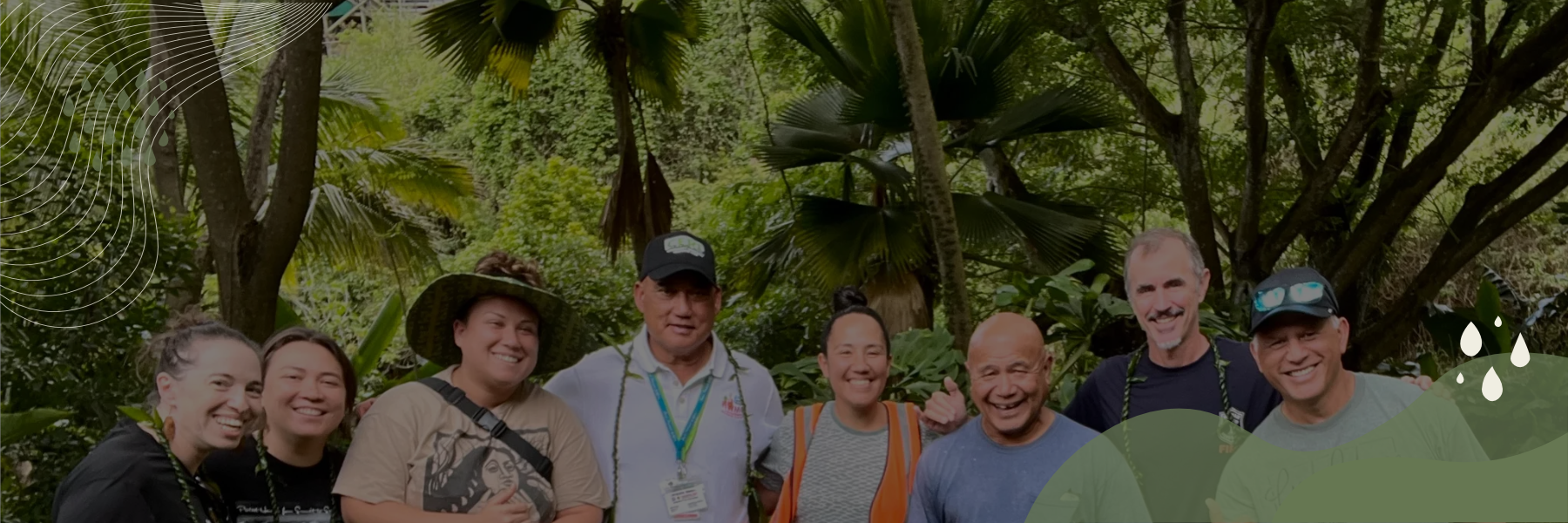
On Tuesday, November 12, from around 2-5:30pm, the following members of Nā Leo o Papakōlea led/attended a “community wildfire risk assessment” for Kalāwahine, Kewalo, and Papakōlea:
- Noel Shaw (Kalāwahine)
- Anuheaokalani Kanealiʻi (Kewalo)
- Curtis Aiwohi (Kalāwahine, Honolulu Fire Department)
- Ricky Chan (Papakōlea)
- La’amea Paleka (Papakōlea)
The following fire prevention/mitigation/response experts joined to conduct the assessment and share their manaʻo with the community:
- Harriet Parsons, HWMO Firewise Community Support Specialist
- Ashley Bare, HWMO Firewise Community Support Specialist
- Mike Mundon-Puʻukapu, Hawaiʻi County CERT (Community Emergency Response Team)
- Michael Walker, DLNR Statewide Administration Fire Protection Forester
The following community members also joined at specific points during the walkthrough to share their manaʻo about those homes/sites:
- WilmaGay Kaʻopuiki-Heen & Pono Heen (Papakōlea)
- John Kema (Kalāwahine)
I also joined to take notes (and record audio when possible). I shared my notes and recordings with Nā Leo o Papakōlea afterward so they’d be able to refer back to specific details when they start creating the three-year action plan.
Where did we go?

The walkthrough covered eight locations across Kalāwahine, Kewalo & Papakōlea, chosen by Nā Leo o Papakōlea to give HWMO an overview of the three communities, their history, and the homes, ʻāīna, infrastructure and other relevant context that could help inform the assessment report and three-year action plan. These locations included:
- Kalāwahine mauka park
- Shaw ‘ohana home
- Kewalo makai park + drainage basin
- Kaneali’i ‘ohana home + lots around Anianiku St.
- Papakōlea Community Park
- Kaʻopuiki-Heen ‘ohana home
- Driveway/overlook on Tantalus Dr. (frequently used as a fireworks launch site)
- Mauka end of Moreira St.
What did we do?
Noel and Anu started off the day by sharing an oli to welcome the HWMO team to Kalāwahine, giving them lei, and talking story about the histories and waiwai of the homesteads, as well as past fires that have happened there.
(Kalāwahine, Kewalo, and Papakōlea are all at a high risk of wildfire and are particularly vulnerable to loss of life and property damage as a result of wildfires, based on the USDA Forest Service’s wildfire risk mapping, as well as community members’ own moʻolelo and kilo).
At each site, members of Nā Leo o Papakōlea and the HWMO team identified major fire hazards opportunities to address those risks. Below are some of the key risks/opportunities that were discussed (note: this isn’t a full list of possible actions — Nā Leo o Papakōlea will share more at their fire safety meeting on December 21).
| Limited road access in/out – could prevent residents from evacuating quickly in event of fire – only one road in/out of Kalāwahine, two in/out of Papakōlea & Kewalo | – Request DHHL complete a previously planned (but unfinished) fire road connecting Kalāwahine mauka park to Tantalus Dr. – Develop a community evacuation plan w/ details like contact info, number of residents, and other info to assist community and/or first responders in the event of a rescue/evacuation |
| First responder access – winding roads already make it difficult for firetruck to access – parked/abandoned cars could make it impossible – cars also obstruct fire hydrant access – hydrants haven’t been tested recently to ensure proper pressure | – Work w/ community to ensure cars don’t block hydrants – Request HFD pressure test hydrants – Coordinate w/ HFD to ensure they have a plan to effectively respond to fires if firetruck access is blocked |
| Abandoned homes & other structures structures burn hotter and longer than vegetation, making them a more dangerous “fuel” | – Request DHHL remove dilapidated, unused structures (lessees would still keep the lease — just the structure/hazard would be removed) |
| Home/construction material concerns – open eaves can allow fires to start in and/or spread to attics – debris in crawl spaces/areas under homes can become fuel source – some homes have outdated/flammable roofing and siding material – many homes, especially in Kalāwahine, are built very close to each other – “geo-mesh” fabric (used to prevent hillside erosion) is what ignited during NYE 2023 fire | – Educate community about installing fireproof eaves & other home improvements – HWMO available to do individual home assessments for any lessees who request it – Distribute fire blankets, gloves & other home firefighting tools |
| Overgrown/dry/non-native vegetation – haole koa, California grass, banyan trees etc. – overgrown vegetation in immediate area around homes (called the “home ignition zone”) are a fuel source – lack of water in Kalāwahine stream contributes to dry vegetation | – Requests to DHHL & other county/state agencies to help address neglected areas on easements/ outside of lessee property lines – Community-led “laulima” yard work days to mālama high-risk homes – Community mālama ʻāina workdays to remove invasive & restore native plants, and help restore stream flow |
| Aerial fireworks are a major ignition concern | – Educate community about risks of launching aerial fireworks — and safety benefits of reducing fireworks activity |
My observations & takeaways

(Note: I included this section to offer some manaʻo from my experience as a journalist, kiaʻi ʻāina, and as someone who wants to do whatever they can to help prevent the next Lāhainā. However, these are my own opinions, and ultimately, your community’s own manaʻo is what’s most important).
Community care & ʻike
I’ll start by saying that the biggest takeaway for me was how much each member of Nā Leo o Papakōlea and the HWMO team cares about keeping this community safe. While everyone may have different relationships with these folks, I just want to recognize the effort they all put into initiating, coordinating and preparing for this walkthrough, and how dedicated they continue to be to serving the entire community and future generations who will benefit from this work. These organizers also clearly hold deep compassion for people across their community, and despite any personal pilikia, their efforts seem, to me, to come from a place of aloha.
Another learning is that there is an abundance of knowledge within your community about your communities, and that the Nā Leo o Papakōlea folks offered just as many ideas about how to help keep your community safe as the HWMO team did. They knew specific details — like how the geo-mesh, not the vegetation, was the primary fuel source during the NYE fire, or how the fire hydrants are overdue for pressure testing — that will be essential in developing an effective three-year action plan.
The takeaway here in my mind is that the more you speak up about specific fire hazards near/around your home and neighborhood, the better this community action plan will be. Also, the more everyone collectively pitches in to this work, the more efficient and effective you’ll be as a community in keeping everyone safe.
Aligning interests & accountability
This observation comes from my experience as a journalist, which has made me skeptical of people and organizations with power and/or that aren’t run by/with people from the community they’re saying they want to help.
Sometimes, their interests conflict with the community’s interests, and when they’re not part of the community, it can be harder to hold those people and organizations accountable. There is a long track record of institutions like DHHL, the county/state, and even nonprofits making promises that they never make good on, even if the intentions are good.
For example, DHHL has neglected to remove dangerous invasive species from Kalāwahine mauka park, despite their responsibility to mālama that area, and community membersʻ repeated requests and assistance marking specific trees for removal.
The reason I mention this skepticism is that it shapes how I initially view an organization like HWMO.
So, first I try to figure out: what’s their incentive? What box(es) do they need to check in order for their bosses or funders or supporters to believe they’re doing a good job? And then, does that goal align with the community’s goals?
For HWMO, that might be getting as many communities Firewise certified each year as possible. But if HWMO ends up cutting corners to get more communities certified — maybe they spend less time writing their assessment, or fail to follow through on connecting a community with fire prevention resources — then the “number of communities certified” may not be an accurate measurement of “how much safer” each of those communities are in reality.
So, as a journalist, I try to look at other factors, like: what’s the organization’s past track record, who works their and what are they like, what’s the culture like, what incentive(s) do they have to care about the community’s goals?
Based on my first impression of the HWMO team, I felt that the individuals who showed up to the walkthrough were genuinely invested in working with Nā Leo o Papakōlea and your community to get you as much education and resources as possible and supporting the goals you have as a community.
But another challenge is that individuals come and go, and communities often have to take additional steps to hold organizations like HWMO, DHHL, and others accountable.
So, the third learning, from my perspective, is to work together to identify ways to work with and motivate these organizations to fulfill their kuleana to your community.
Mike Mundon-Puʻukapu shared one example that stuck out to me.
The group was looking at an abandoned, broken-down home in Papakōlea, which the HWMO team noted was a major fire hazard, because in a fire, the wood structure would burn for a long time, increasing the risk to the homes around it. Mike suggested that Nā Leo o Papakōlea reach out to DHHL and get them to remove that structure as soon as possible. Aunty Wilma noted that the lessee hadn’t yet released it to DHHL, implying DHHL may be reluctant to take action.
Mike responded: “the bigger one gets sued, ya? And that would be DHHL.”
To be clear, everyone was still committed to coordinating with the lessee, but Mike’s point was to remind DHHL that they have a financial incentive to work with the community to get these fire hazards addressed: if they don’t, and a fire wreaks havoc, there will be huge costs for them too.
It was clear to me that, between Nā Leo o Papakōlea and the HWMO team, there was a clear consensus on the major fire hazards and possible ways to address those risks. The challenges will be 1) building relationships — with community members, DHHL, county, city, state and federal officials, nonprofits, and anyone else willing to kōkua for the long-haul, and 2) identifying areas where people want to work together, and holding those in power accountable when their interests don’t align with yours.
Abundant futures & new stories
The final learning I took away from the walkthrough is that, in talking about all these hazards and risks to your community, Nā Leo o Papakōlea also repeatedly talked about their visions and hopes for an abundant and thriving community.
They articulated a vision of restoring Kalawāhine stream and growing lāʻau lapaʻau and native foods again, so that they can feed the community and provide economic opportunities. At the end of Moreira St., looking at one resident’s māla, the group dreamed up an idea of farmers in the community running educational workshops for keiki. They shared how, while fireworks boom in one ear, the mele of the community’s abundance of musicians echoes in the other.
In doing this work to make the community safer, they also saw an opportunity to shift the existing narratives about these homesteads and tell different stories, stories guided by all of you, not just outsiders — stories that uplift your collective waiwai for future generations to celebrate.
What happens next & how you can help
Since the walkthrough, the HWMO team has been working on the risk assessment report, which they expect to have ready in the next few weeks. They’ll share that with Nā Leo o Papakōlea, who will use it, along with additional community input, to put together a three-year action plan.
Once that report is completed, they’ll need the community’s help to take action. To get (and stay) Firewise certified, the community needs to, every year, log “one volunteer hour” per home included in the plan. But that’s just a minimum that Firewise came up with, and over time, your community might identify additional ways of determining whether you’ve put in enough work to feel safe.
So, if you want to laulima alongside Nā Leo o Papakōlea and others working to keep the community safe, the first thing they suggested is to RSVP to their fire safety event:
Nā Leo o Papakōlea Firewise: Fire Safety Day for a Fire Free New Years and 2025 Saturday December 21, 9am-12pm Lincoln Elementary
RSVP HERE:
In the meantime, Firewise USA has a handy guide on how to prepare your home to better withstand wildfire, and Nā Leo o Papakōlea’s website has lots of fire education materials.
After the walkthrough, as Noel and I were reflecting on the day and next steps, we looked up Kapahu St., and saw what seemed like a pretty good hōʻailona of what lies ahead, and I felt this was a good note to end on for now.
ʻAʻole i pau.


Take action!
Join a community workday: